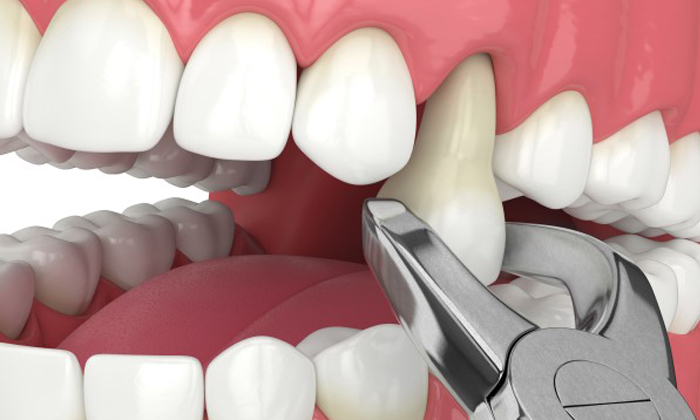
Surgical tooth extractions (also called “open extractions”) are tooth removal procedures in which surgical access is required to completely remove a tooth. Even if the tooth is visible in the mouth without surgically exposing it, surgical techniques may be necessary to remove the tooth. This includes sectioning the tooth into two or more pieces, whether or not a soft tissue incision is made. Surgical tooth extractions include removal of impacted wisdom teeth (third molars), but this does not mean that all wisdom teeth requiring removal are required to be removed surgically.
Removal (extraction) of a tooth is prescribed if the tooth is too extensively damaged from decay or trauma to be fixable, or if it is infected and the patient is not a candidate for root canal treatment. It is also frequently prescribed when the teeth of one or both dental arches are severely crowded, and straightening the teeth would require unnecessarily complex orthodontics with a potentially compromised treatment outcome.
The surgical extraction is performed under local anesthesia. If the tooth is not visible, or is only partly visible in the mouth, it will be necessary to gently expose the tooth with an incision in the gum tissues.
It may be necessary to remove enough bone from around the tooth to allow its removal.
When the tooth is out, the gum is sutured and gauze is placed in your mouth to bite on to control bleeding.
Oral or written post-operative instructions are helpful. Although they may seem simple at the time of your appointment, questions frequently come up later. Do not hesitate to ask questions.