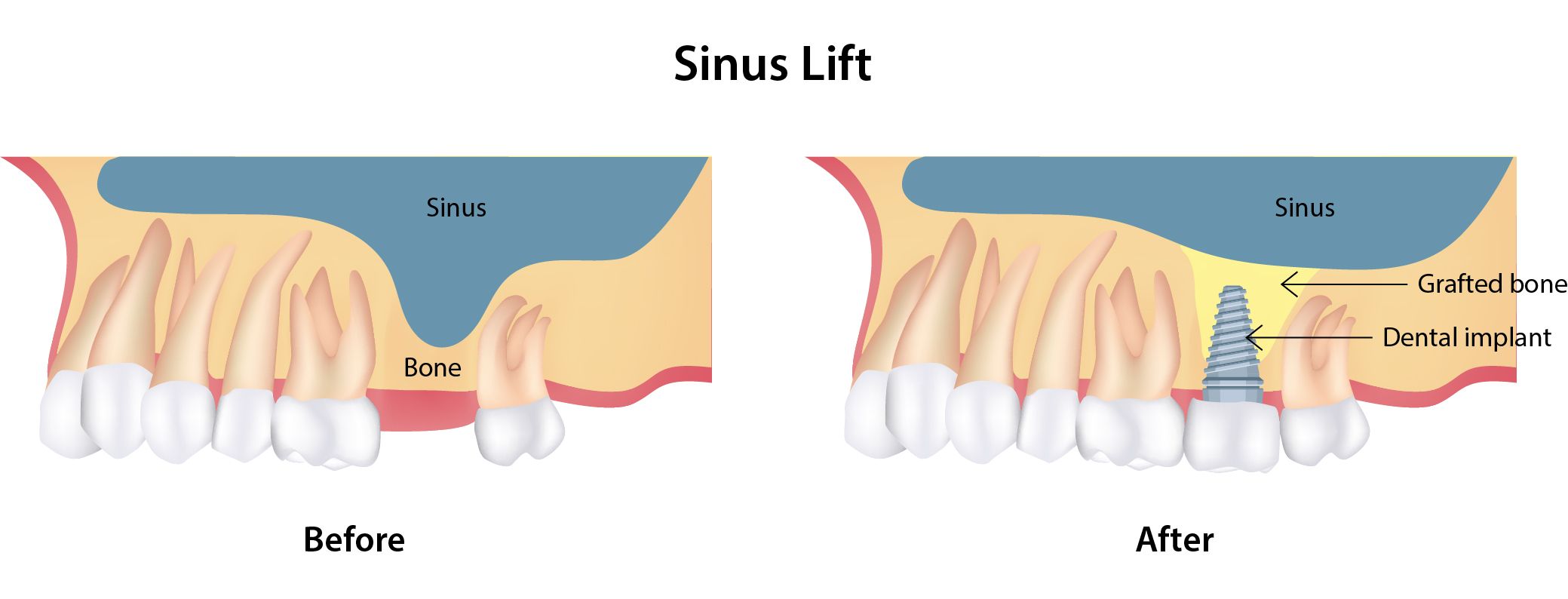
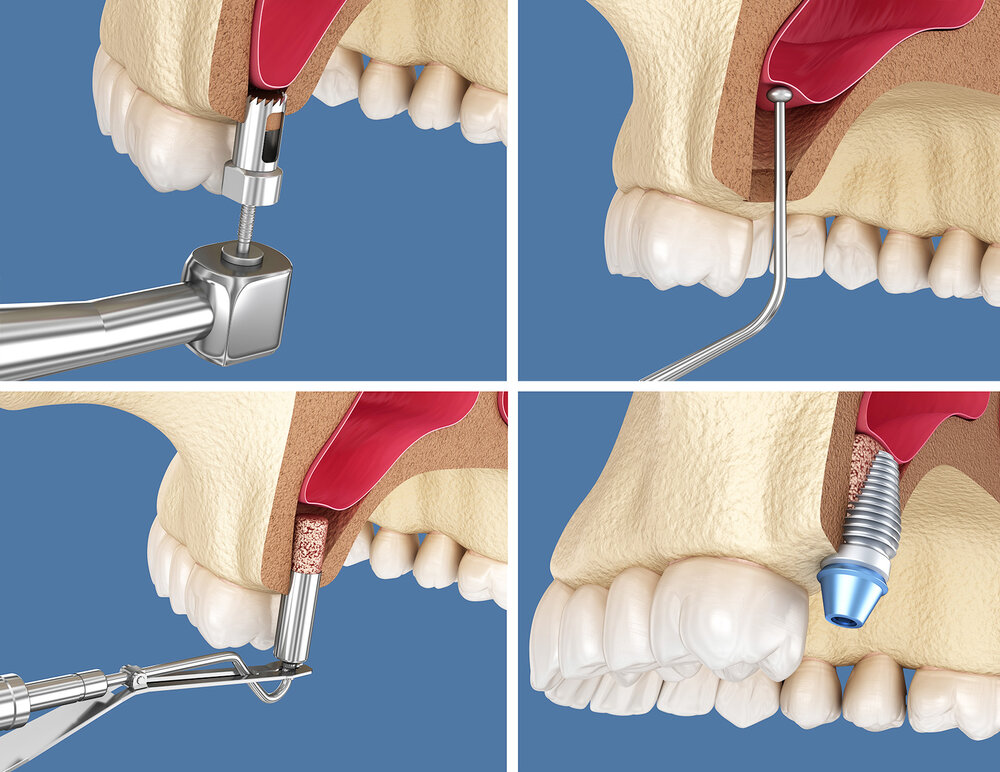
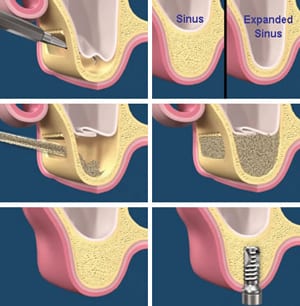
A sinus lift is surgery that adds bone to your upper jaw in the area of your molars and premolars. It’s sometimes called a sinus augmentation. The bone is added between your jaw and the maxillary sinuses, which are on either side of your nose. To make room for the bone, the sinus membrane has to be moved upward, or “lifted.” A sinus lift is done when there is not enough bone height in the upper jaw, or the sinuses are too close to the jaw, for dental implants to be placed.
Many people who have lost teeth in their upper jaw — particularly the back teeth, or molars — do not have enough bone for implants to be placed. Because of the anatomy of the skull, the back of the upper jaw has less bone than the lower jaw.
Bone may have been lost because of periodontal (gum) disease.
Tooth loss may have led to a loss of bone as well. Once teeth are gone, bone begins to be resorbed (absorbed back into the body). If teeth have been missing for a long time, there often is not enough bone left to place implants.
Tooth loss may have led to a loss of bone as well. Once teeth are gone, bone begins to be resorbed (absorbed back into the body). If teeth have been missing for a long time, there often is not enough bone left to place implants.
The goal of the sinus lift is to graft extra bone into the maxillary sinus, so more bone is available to support a dental implant. The graft material used can be either an autograft, an allograft, a xenograft, an alloplast (a growth-factor infused collagen matrix), synthetic variants, or combinations.
After a sinus lift, you need to wait several months for the bony material to harden and integrate with the jaw. Depending on the grafting material used, implants may be placed in four to nine months.
In some cases the dental implant is also inserted during the same sinus lift procedure.