Wisdom teeth
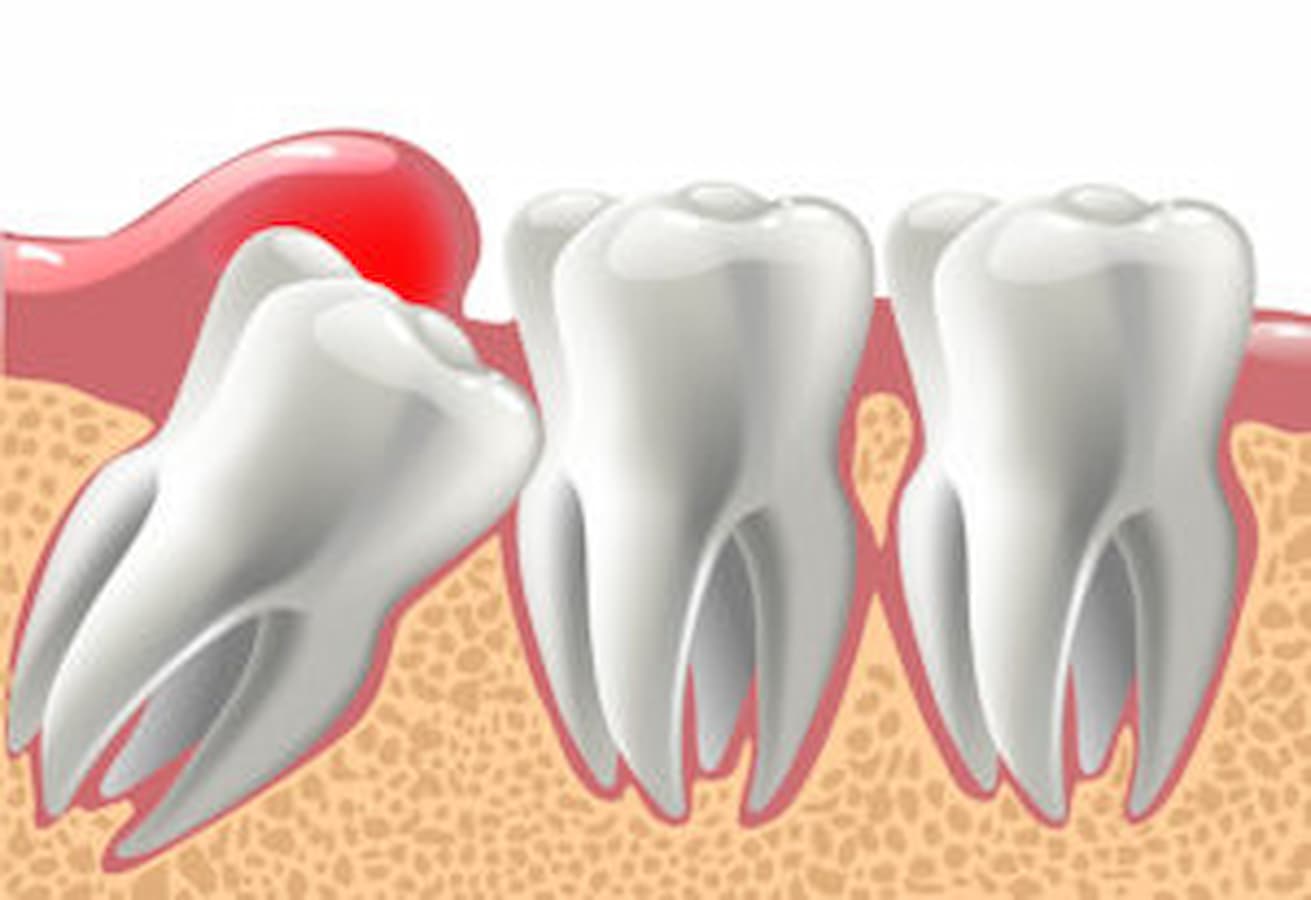
Wisdom teeth are the third and final set of molars that most people get in their late teens or early twenties. Sometimes these teeth can be a valuable asset to the mouth when healthy and properly aligned, but more often, they are impacted and require removal.
Wisdom teeth often can be impacted – they are enclosed within the soft tissue and/or the jawbone or only partially break through or erupt through the gum. Partial eruption of the wisdom teeth allows an opening for bacteria to enter around the tooth and cause an infection, which results in pain, swelling, jaw stiffness, and general illness. Partially erupted teeth are also more prone to tooth decay and gum disease because their hard-to-reach location and awkward positioning makes brushing and flossing difficult.Impacted wisdom teeth can crowd or damage adjacent teeth, the jawbone, or nerves.
Surgical removal
The removal of wisdom teeth is performed under local anesthesia.The wisdom tooth that is underneath the gums and embedded in the jawbone will require an incision into the gums and then removal of the portion of bone that lies over the tooth. Often, for a tooth in this situation, the tooth will be extracted in small sections rather than removed in one piece to minimize the amount of bone that needs to be removed to get the tooth out. Once the teeth are removed, the gum is sutured and gauze is placed in your mouth to bite on to control bleeding. You will rest under our supervision in the office until you are ready to be taken home. Upon discharge, we will give you a postoperative instructions, a prescription for pain medication, antibiotics and a follow-up appointment in one week for suture removal. If you have any questions, please do not hesitate to make a call at the office.